Your workpiece may fit on the table, but is there enough room for the fixture and tool movement? A high-speed spindle may look attractive, but will it provide enough torque for heavy steel cutting? And do your parts really need a 4th or 5th axis, or would a well-configured 3-axis machine be more efficient?
These are the questions that matter before you compare machine models.
The best way to choose is to work backward from your parts. Start with the workpiece size, material, machining features, cutting load, tolerance, and production volume, then match these requirements to the machine travel, spindle, rigidity, axis configuration, and supporting systems.
This guide will show you how to make that selection step by step.
Before comparing spindle speed, machine travel, or controller options, start with the part you actually need to make.
Take one of your typical drawings and ask a few basic questions: How large is the part? What material is it made from? How many sides need machining? How much material must be removed? What tolerances matter most? And how many parts do you expect to produce?
These answers will quickly narrow down the machine you need.
|
Part Requirement |
What It Affects |
|
Part dimensions |
X, Y, Z travel and table size |
|
Part + fixture weight |
Table load capacity |
|
Material |
Spindle torque, speed, and machine rigidity |
|
Machining features |
3-axis, 4-axis, or 5-axis requirement |
|
Material removal |
Cutting power and structural rigidity |
|
Tool quantity |
Tool magazine capacity |
|
Tolerance |
Machine stability and inspection needs |
|
Production volume |
Speed, automation, and productivity |
For example, two parts may have nearly the same dimensions but require very different machines.
An aluminum housing with many holes and pockets may benefit from higher spindle speed and faster feed rates. A steel mold base of the same size may require more torque, rigidity, and cutting stability.
So do not stop at the question:
“Can this machine hold my part?”
Also ask:
“Can this machine process my part efficiently under the actual cutting conditions?”
Once these basic part requirements are clear, you can start matching them to machine travel, table capacity, spindle performance, rigidity, and axis configuration.
Once you know the size of your part, the next step is to make sure the machine has enough usable machining space.
Do not match machine travel to the workpiece dimensions alone.
A 900 mm-long part does not automatically mean that 900 mm of X-axis travel is enough. You still need room for the fixture, clamps, tool approach, and safe movement around the part.
A more practical way to think about it is:
Part Size + Fixture + Clamping Space + Tool Access = Required Machining Envelope
When comparing vertical CNC machines, check these specifications together:
|
Machine Specification |
What You Need to Check |
|
X/Y/Z travel |
Can the tool reach all required machining areas? |
|
Table size |
Can the part and fixture be mounted safely? |
|
Table load |
Can it support the part, fixture, and accessories? |
|
Spindle-to-table distance |
Is there enough clearance for tall parts and long tools? |
Table load is especially easy to overlook. The machine does not carry only the workpiece. Fixtures, vises, rotary tables, and multiple-part setups all add weight.
The same applies to Z-axis capacity. A tall fixture, long tool, or rotary table can quickly reduce the usable vertical space.
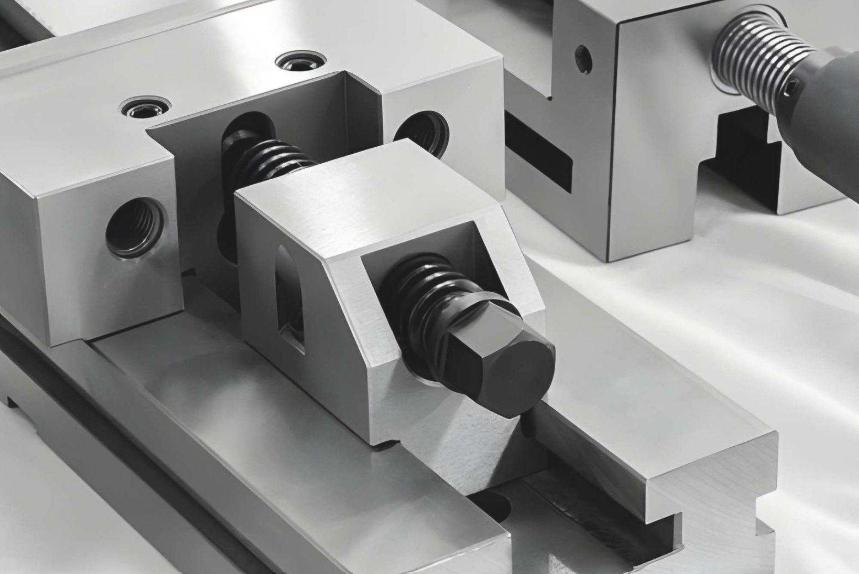
So before choosing a machine size, ask:
Can the part fit on the table, be clamped properly, and still leave enough room for the tool to complete every operation?
Choose enough capacity for your normal production and reasonable future growth, but avoid oversizing the machine simply because a larger travel looks safer.
The same size part can require a very different machine depending on the material and cutting load. Before choosing the machine structure, think about how much cutting force your process will generate.
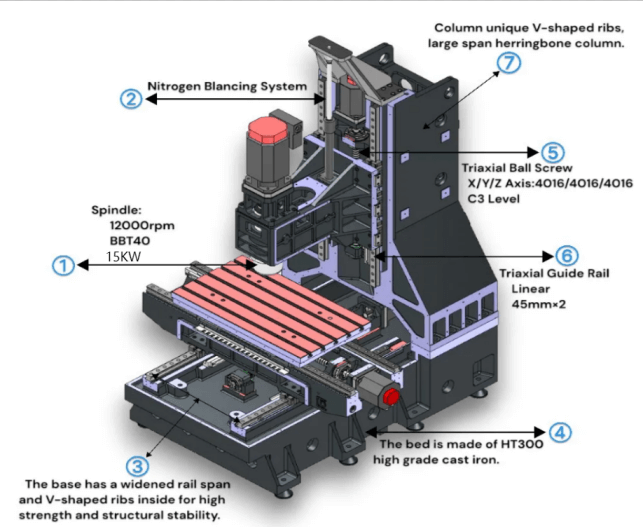
For aluminum, general components, and lighter steel machining, speed and responsiveness are often more important.
You may prioritize:
For these jobs, you usually do not need an extremely heavy machine structure.
Steel, cast iron, mold bases, and large stock removal place much higher loads on the machine.
In these cases, pay more attention to:
Large cutters, deep cuts, and continuous roughing all increase the need for rigidity.
The spindle should match how your parts are actually machined. Higher RPM is useful for some jobs, but it does not automatically mean better performance.
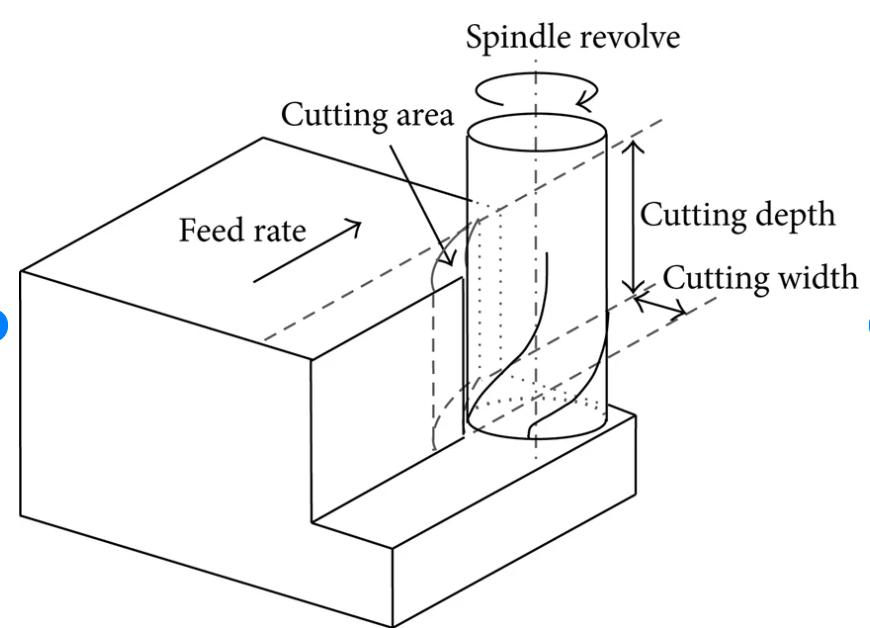
Higher spindle speed is more useful when machining:
If most of your work involves small tools and light cuts, spindle speed can have a direct effect on cycle time and surface finish.
For steel, cast iron, large cutters, or heavy roughing, torque becomes more important than maximum RPM.
Higher torque helps maintain stable cutting when you use:
A 15,000 rpm spindle is not always a better choice than a 10,000 rpm spindle if your parts mainly require heavy cutting.
Tool interface and tool size should also match your machining conditions.
For general-purpose machining, a smaller tool interface may be sufficient. For heavier cutting or larger tools, a more rigid tool interface can provide better support and cutting stability.
The key is simple:
Choose the spindle for your material, tool size, and cutting load—not for the highest number on the specification sheet.
The number of axes you need depends mainly on how many sides and angles you must machine.
More axes can reduce setups, but they also increase machine cost and programming complexity. The goal is to use only the capability your parts actually need.
A 3-axis vertical CNC machine is usually enough when most features can be reached from the top or with simple repositioning.
Typical parts include:
If you can complete your parts efficiently in one or two setups, a 3-axis machine is often the most practical choice.
A 4th axis is useful when the part has features around several sides.
It can help reduce manual repositioning when machining:
The main benefit is not simply “one more axis,” but fewer setups and better machining continuity.
5-axis machining becomes more useful when the part contains:
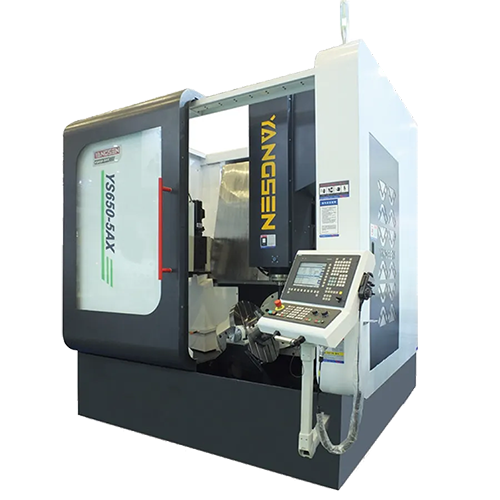
Before choosing 5-axis, ask one question:
Can the extra axes significantly reduce setups or make difficult features easier to machine?
If not, a 3-axis or 4-axis solution may be more cost-effective for your parts.
Once the machine size, rigidity, spindle, and axis configuration are clear, look at the supporting systems your process actually needs.
Start with the number of tools required to complete a typical part.
If your process uses face mills, drills, taps, boring tools, and finishing tools in one setup, a larger tool magazine can reduce manual tool changes and interruptions.
For simple parts, however, extra tool positions may add little value.

Heavy cutting, deep-hole machining, and high-volume production generate more heat and chips.
Depending on your process, you may need:
Good chip and coolant management helps maintain stable cutting and reduces unnecessary machine stops.
Options such as workpiece probes, tool setters, rotary tables, and automatic loading can improve efficiency, especially in batch production.
But every option should solve a real problem.
Ask yourself:
Will this configuration reduce setup time, improve process control, or shorten the production cycle?
If the answer is no, you may not need it.
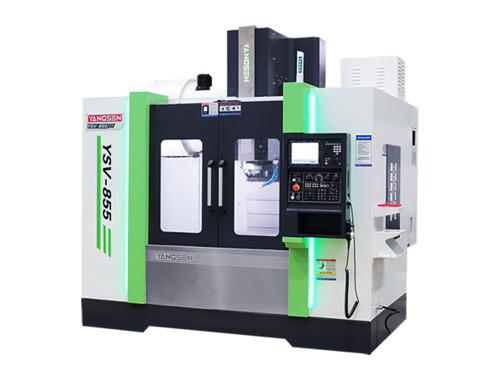
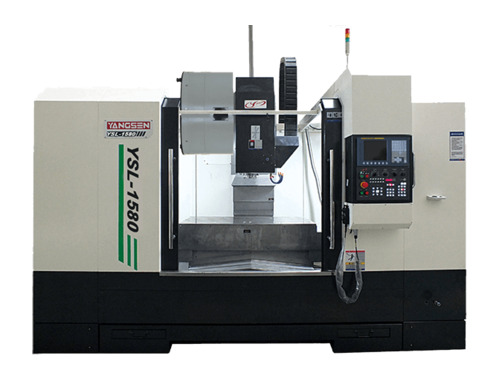
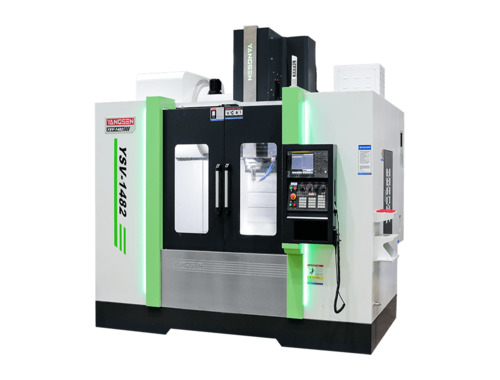
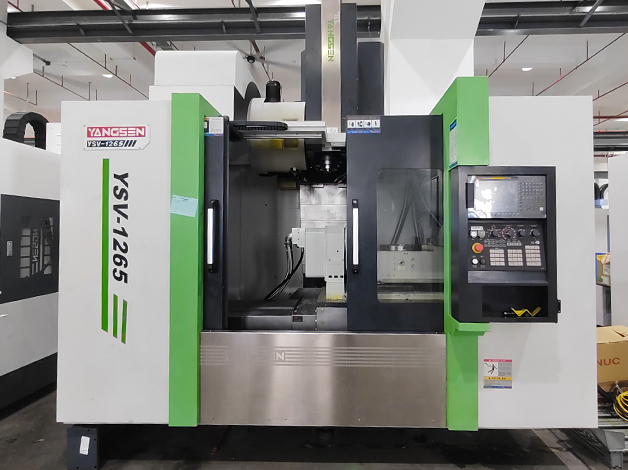
Once you know your part size, material, cutting load, and production needs, you can narrow down the YANGSEN VMC series much faster.
Use your main machining requirement as the starting point:
|
Your Machining Need |
YANGSEN Machine Direction |
Typical Parts |
|
General precision machining |
YSV Series |
Automotive parts, valves, general components |
|
Higher-rigidity cutting |
YSL Series |
Molds, harder materials, heavier cutting |
|
Many tools or multiple processes |
YSV Dual-ATC |
Mold bases, complex parts, multi-process components |
|
Specialized or batch production |
YS Special Series |
Dedicated parts and high-volume production |
YANGSEN’s current VMC selection guide follows the same basic logic: YSV is positioned toward general precision and efficient machining, YSL toward greater cutting stability, Dual-ATC configurations toward higher tool capacity, and the YS Special Series toward specific production requirements.
You do not need to choose the exact model by yourself.
Prepare these basic details:
Then compare these requirements with the available machine travel and configuration.
Already have a part drawing? Send it with your machining requirements. YANGSEN engineers can help you narrow down the suitable VMC series and machine size instead of selecting from model numbers alone.
Q: How much larger should machine travel be than my part?
A: Do not match travel to the part size alone. You also need space for fixtures, clamps, tool access, and safe axis movement. Check the complete machining envelope rather than adding a fixed percentage to the workpiece size.
Q: How do I know if my part needs a high-rigidity VMC?
A: Look at the cutting load. If your process involves heavy steel cutting, deep roughing, large cutters, or high material removal, rigidity becomes more important. For aluminum and lighter general machining, speed and axis response may matter more.
Q: Is a higher spindle speed always better?
A: No. Higher RPM is useful for small tools, aluminum, and high-speed finishing. Heavy cutting in steel or cast iron may benefit more from spindle torque and power. Choose the spindle around your normal cutting process.
Q: Should I choose a 3-axis, 4-axis, or 5-axis machine?
A: Count how many sides and angles need machining. A 3-axis machine is usually enough for simpler parts. A 4th axis can reduce repositioning for multi-side parts, while 5-axis machining is more useful for complex angles and difficult tool access.
Q: What information should I provide when asking for a machine recommendation?
A: Prepare the following information:
The more complete the part information is, the easier it is to recommend the correct machine size and configuration.
Q: Can I send my part drawing before choosing a YANGSEN machine?
A: Yes. In fact, this is often the best starting point. Your drawing allows the engineering team to evaluate machine travel, table capacity, spindle requirements, rigidity, axis configuration, and optional systems based on the actual part instead of selecting only by model number.
A suitable machine should not only be able to machine the part. It should also do it efficiently, reliably, and without unnecessary configuration.
If you already have a part drawing, material information, and machining requirements, you can use them as the basis for machine selection.
For YANGSEN machine selection, you can send your part details to our engineering team to help narrow down the suitable vertical CNC machine configuration for your application.
Contact CNC Yangsen to find the right CNC machining solution for your production needs.

タグ :