As your machine shop takes on more complex parts, your existing CNC machines may start to show their limits. Frequent setups, hard-to-reach features, and longer machining cycles can slow production and increase costs.
But does that mean it's time to invest in a 5-axis CNC machine? Here are 10 signs that can help you decide whether 5-axis machining is the right next step for your shop.
Not every machining challenge requires a new machine. However, when certain problems keep affecting your production, it may be time to consider 5-axis machining. Here are 10 signs to look for in your shop.
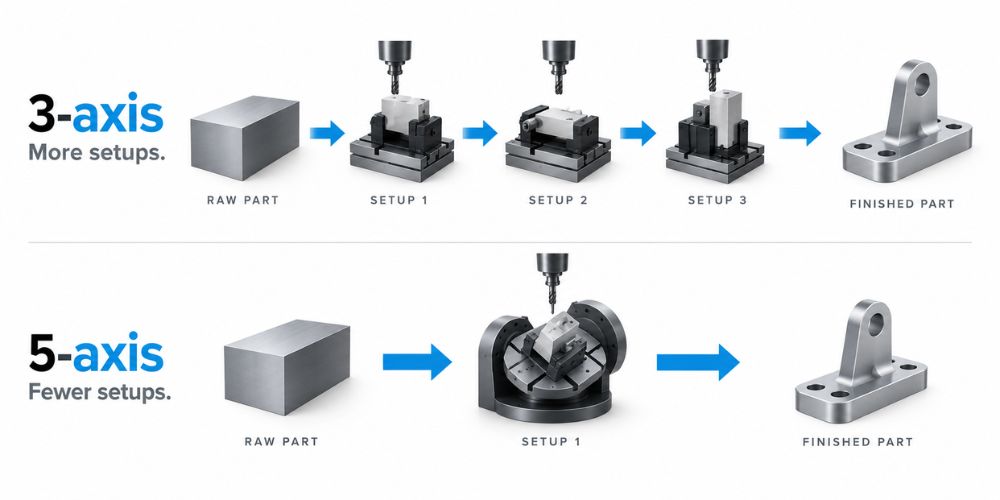
On a 3-axis CNC machine, parts with features on multiple sides often require several setups. Each setup involves removing, repositioning, and aligning the workpiece before machining can continue.
A 5-axis CNC machine can reach multiple sides of a part in a single setup, reducing the need for repeated positioning. This is especially useful for housings, brackets, and other parts with features on different faces.
If setup time accounts for a large part of your production cycle, upgrading to 5-axis machining may be worth considering.
Are your customers requesting parts with curved surfaces, angled features, or complex contours?
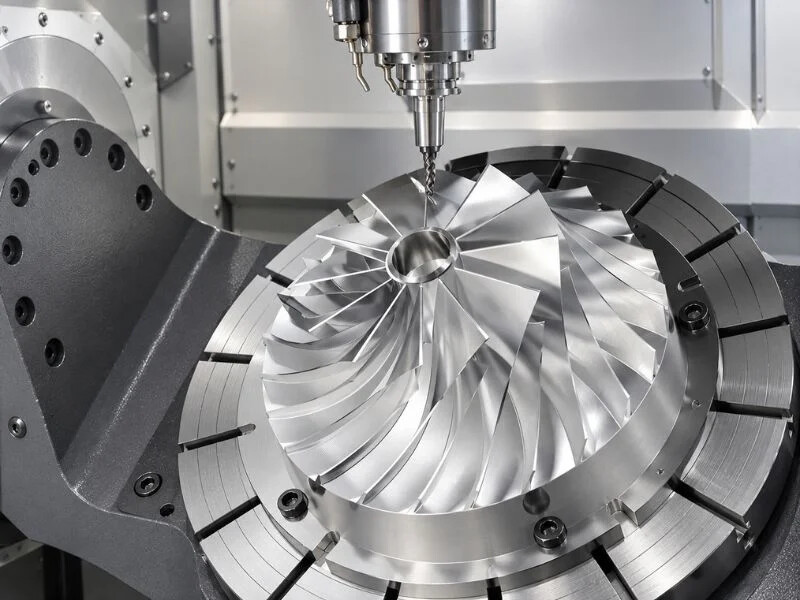
These geometries can be difficult to machine with traditional 3-axis equipment. Some features may require several operations, while others cannot be reached from a fixed tool direction.
5-axis CNC machining allows the tool and workpiece to move relative to each other along five axes. This makes it easier to approach complex features from different angles and maintain suitable cutting positions.
When a part requires accurate relationships between multiple surfaces, repeated setups can create problems.
Every time a workpiece is removed and repositioned, small alignment errors may occur. These errors can affect hole positions, surface relationships, and other critical dimensions.
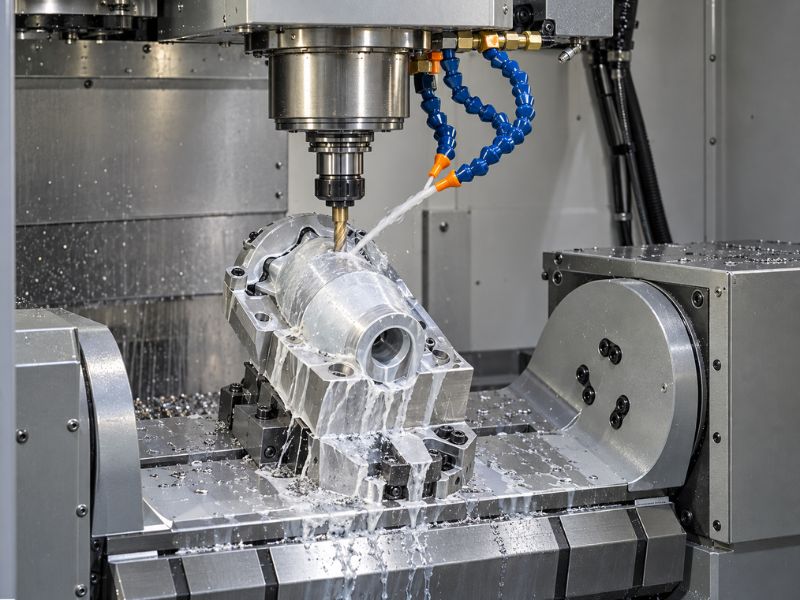
A 5-axis CNC machine can machine several features without removing the part from its fixture. This reduces the risk of repositioning errors and helps maintain consistent relationships between machined features.
Some parts have deep pockets, angled holes, or features hidden behind surrounding surfaces. Reaching these areas with a 3-axis CNC machine can be difficult.
A 5-axis machining center can rotate or tilt the workpiece or tool to create a better approach angle.
For example, an angled hole can often be machined by positioning the workpiece so the cutting tool aligns with the hole axis.
Long cutting tools are sometimes necessary when machining deep cavities or hard-to-reach surfaces. However, excessive tool overhang can reduce cutting stability.
Common problems include:
With 5-axis machining, the tool can approach certain features from a more suitable angle. This may allow you to use shorter cutting tools while maintaining access to the required surfaces.
Complex curved surfaces can be difficult to finish consistently using fixed tool orientations. Poor cutting angles, tool marks, and uneven surface transitions may increase the amount of manual finishing required.
During simultaneous 5-axis machining, the tool orientation can change as it follows the surface. This helps maintain more suitable cutting conditions on certain complex geometries.
For precision molds and curved components, an optimized 5-axis toolpath may improve surface finish and reduce some polishing work.
Long machining lead times are not always caused by slow cutting speeds. They can also result from repeated setups, machine transfers, and waiting between operations.
A 5-axis machining center can combine some of these operations into a more continuous process. This can reduce handling time and simplify the production route.
Special fixtures are often needed to hold workpieces at different angles on conventional CNC machines.
For shops handling many different part designs, fixture preparation can become a significant expense. Each new part may require additional design work, manufacturing, and setup time.
A 5-axis CNC machine can position the workpiece at different angles using its rotary axes. This can reduce the need for some dedicated angle fixtures.
Some customers need components with multiple angled features, complex surfaces, or demanding machining requirements. Without suitable equipment, your shop may need to outsource these operations or reject the work.
A 5-axis CNC machine can expand the range of parts you can produce in-house.
This is particularly relevant if you serve industries such as:
High-mix, low-volume production means handling many different part designs in relatively small quantities.
In this environment, setup efficiency and machining flexibility can matter as much as cutting speed. Frequent changes between jobs may require different fixtures, tool arrangements, and machining procedures.
A 5-axis machining center can handle various part geometries and approach angles without requiring a separate fixture for every machining direction.
This flexibility can be useful for prototype development, custom components, and small-batch precision machining.
A 5-axis CNC machine is worth considering when its productivity gains and expanded machining capabilities can justify the higher investment. Before upgrading, evaluate these three factors.
If your shop regularly machines complex parts that require multiple setups, 5-axis machining may offer clear benefits. However, if most of your work involves simple geometries that your 3-axis machines handle efficiently, upgrading may not be necessary.
Look beyond the machine's purchase price. Consider setup time, fixture costs, labor, tool wear, and rejected parts. A 5-axis machining center may reduce some of these expenses, but you also need to account for higher maintenance, programming, and training costs.
5-axis machining requires suitable CAM software, skilled operators, and reliable toolpath verification. Make sure your team can handle these requirements before investing.
Once you've decided to invest in a 5-axis CNC machine, the next step is finding one that matches your parts and production needs. Here are three factors to consider.
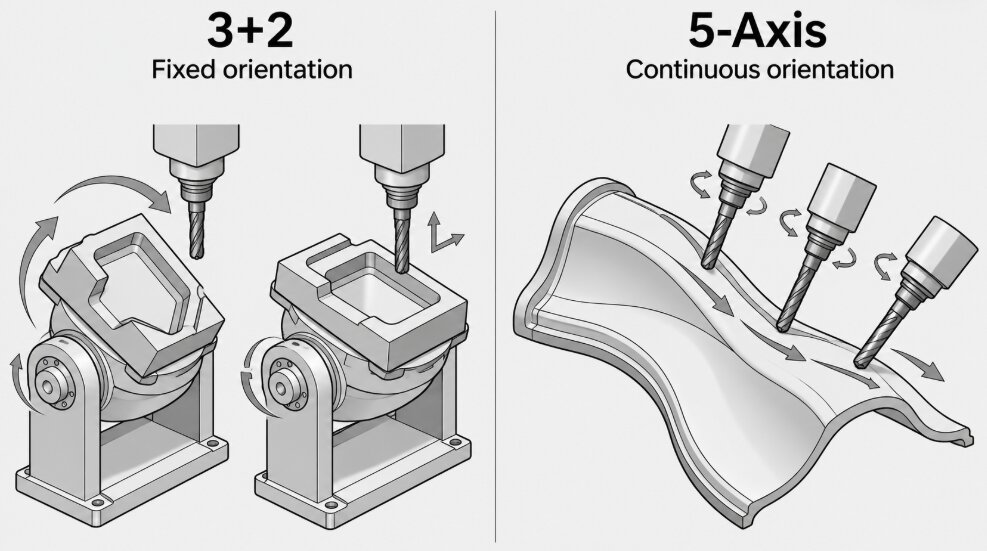
3+2 machining positions the tool or workpiece at a fixed angle before cutting. It suits multi-sided parts, angled holes, and features that don't require continuous rotary movement.
Simultaneous 5-axis machining moves the rotary and linear axes together during cutting. It's better suited for complex curved surfaces, impellers, and parts that require continuous changes in tool orientation.
Start with your largest and heaviest workpieces. Check the machine's axis travel, rotary table size, load capacity, and available machining space.
Consider spindle speed, torque, and rigidity based on the materials you machine. Make sure the machine can accommodate your fixtures and cutting tools without interference.
CNC YANGSEN offers different 5-axis machining centers for various machining requirements.
For example, the YS650-5AX is suitable for smaller precision components and complex milling operations, while the YSU-800-5X provides a larger rotary table and higher load capacity for heavier workpieces.
You can explore CNC YANGSEN's 5-axis machining centers and compare configurations based on your workpiece size, machining requirements, and production needs.
1. When Should You Upgrade From a 3-Axis to a 5-Axis CNC Machine?
You should consider upgrading when your 3-axis machine can no longer handle your parts efficiently. Common signs include frequent setups, complex geometries, and difficulty reaching certain features. If these problems regularly increase machining time or limit your production capabilities, a 5-axis CNC machine may be a better option.
2. Is a 5-Axis CNC Machine Worth It for a Small Machine Shop?
Yes, a 5-axis CNC machine can be worthwhile for a small shop that regularly produces complex, high-value parts. It may reduce setup time and allow you to complete more operations in-house. However, the investment should match your order volume, machining requirements, and available technical skills.
3. Can a 5-Axis CNC Machine Reduce Machining Costs?
Yes, 5-axis CNC machining can reduce costs by cutting setup time, simplifying fixtures, and reducing certain secondary operations. However, these savings depend on your parts and production volume. You should compare the total machining cost, including programming, tooling, maintenance, and machine operating expenses.
4. Can a 5-Axis CNC Machine Replace a 3-Axis Machine?
A 5-axis CNC machine can perform many operations handled by a 3-axis machine, but replacing every 3-axis machine is not always practical. For simple parts and repetitive operations, 3-axis machining may remain more economical. The right choice depends on your part complexity, production volume, and machining costs.
5. What Types of Parts Benefit Most From 5-Axis Machining?
Parts with complex curves, angled features, and multiple machining surfaces often benefit most from 5-axis machining. Common examples include aerospace components, impellers, turbine blades, medical implants, and precision molds. These parts often require flexible tool positioning that is difficult to achieve with conventional 3-axis equipment.
6. What Should You Check Before Buying a 5-Axis CNC Machine?
Start with your workpiece dimensions, weight, material, and accuracy requirements. Then check the machine's axis travel, rotary table capacity, spindle performance, and control system. You should also evaluate CAM compatibility, operator training, technical support, and maintenance requirements before making a purchase.
If your shop regularly handles complex parts or struggles with multiple setups, it may be time to explore 5-axis machining. CNC YANGSEN offers a range of 5-axis machining centers to meet different workpiece and production requirements. Contact our team to discuss your application and find a suitable machine.

タグ :