ブログ

Advantages of High-Speed Machining Centers

Jul 30, 2026

Is a high-speed machining center really worth the investment? For many manufacturers, the answer is yes—but not simply because it runs faster. A well-designed high-speed machining center can shorten cycle times, improve machining accuracy, deliver better surface finishes, and increase overall productivity.

In this article, we'll explore the key advantages of high-speed machining centers, explain why they're becoming the preferred choice for modern manufacturing, and show what features truly define high-performance machining.


What Is a High-Speed Machining Center?

A high-speed machining center is a CNC machine designed to machine parts at higher cutting speeds and feed rates while maintaining excellent accuracy and stability. Compared with a conventional machining center, it is built to complete machining tasks more efficiently, making it ideal for industries that require high precision, superior surface quality, and shorter production cycles.

The biggest difference is that high-speed machining is about overall machine performance, not simply higher spindle speed. A true high-speed machining center combines a rigid machine structure, responsive servo system, high-performance spindle, and advanced CNC control to achieve faster acceleration, smoother cutting, and more consistent machining results.


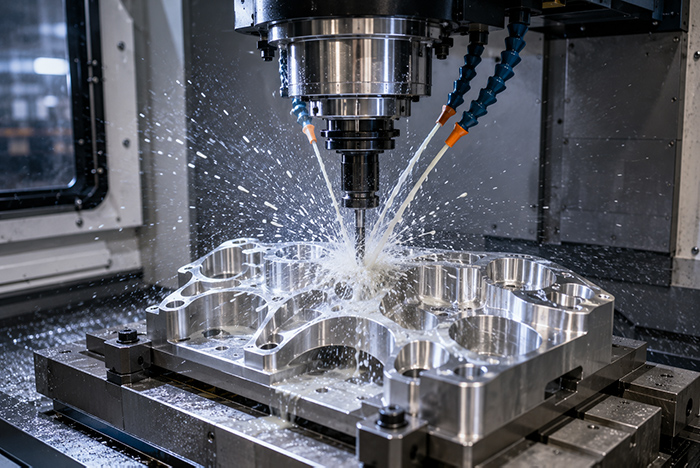
High Speed Machining Center


High-Speed Machining vs Conventional Machining

While both machines perform milling, drilling, tapping, and boring operations, their performance differs significantly in demanding production environments.

A conventional machining center is well suited for general machining and heavy cutting applications. In contrast, a high-speed machining center is optimized for high-efficiency production, allowing manufacturers to reduce cycle times, achieve finer surface finishes, and machine complex parts with greater accuracy.

Whether producing precision molds, aluminum aerospace components, or high-volume automotive parts, a high-speed machining center enables manufacturers to improve productivity without compromising machining quality.


Why High-Speed Machining Is Becoming the Industry Standard

Manufacturing is evolving rapidly, and traditional machining methods are no longer enough for many modern production environments. As products become more complex and customers expect faster delivery, manufacturers need machining solutions that can keep pace without compromising quality. This shift is one of the main reasons why high-speed machining centers are becoming the industry standard.


Shorter Product Development Cycles

Product life cycles are becoming shorter across industries. New models and custom designs reach the market faster than ever, leaving manufacturers with less time for production. High-speed machining helps companies respond more quickly by reducing machining time and increasing production capacity.


Higher Demand for Precision Parts

Industries such as aerospace, medical, electronics, and mold manufacturing require tighter tolerances and better surface quality. As quality standards continue to rise, manufacturers are increasingly turning to high-speed machining to achieve more consistent machining results.


Growing Labor Costs

Hiring skilled machinists is becoming more expensive in many regions. Rather than relying solely on additional labor or longer working hours, manufacturers are investing in more efficient equipment that can produce more parts within the same production time.


Smart Manufacturing and Automation

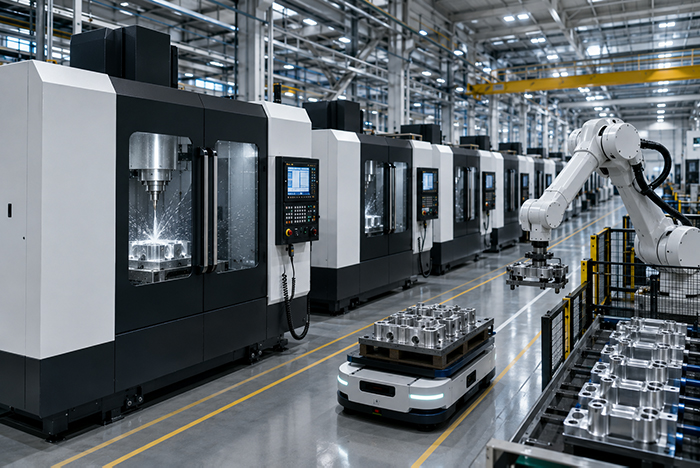
Modern factories are moving toward automation and intelligent manufacturing. High-speed machining centers integrate more easily with automated production lines, robotic loading systems, and digital manufacturing processes, helping companies improve productivity while supporting future production upgrades.


 Why High-Speed Machining Is Becoming the Industry Standard


The Key Advantages of High-Speed Machining Centers


A high-speed machining center offers far more than faster spindle speeds. It helps manufacturers improve productivity, maintain consistent quality, and reduce overall production costs. Here are the key benefits that make high-speed machining an increasingly popular choice across modern manufacturing.


Faster Production Cycles

Higher cutting speeds, rapid tool changes, and faster axis movements significantly reduce machining time. This allows manufacturers to produce more parts within the same working hours, shorten delivery times, and increase overall production capacity without adding more machines.


Superior Surface Finish

High-speed machining produces smoother surfaces and cleaner cutting edges, reducing or even eliminating the need for secondary finishing processes. This not only saves time but also improves the overall appearance and quality of finished parts.


Higher Machining Accuracy

A well-designed high-speed machining center maintains excellent stability during high-speed cutting, helping achieve tighter tolerances and more consistent machining results. This is especially important for industries where precision directly affects product performance.


Lower Manufacturing Costs

Although the initial investment may be higher, high-speed machining helps reduce the cost per part over time. Shorter cycle times, fewer finishing operations, lower scrap rates, and improved machine utilization all contribute to lower overall manufacturing costs.


Longer Tool Life

Modern high-speed machining uses optimized cutting strategies that reduce cutting forces and improve chip evacuation. With proper tooling and machining parameters, tools experience more stable cutting conditions, helping extend tool life and reduce replacement frequency.


Greater Capability for Complex Parts

High-speed machining is ideal for producing complex geometries, deep cavities, thin-wall structures, and intricate contours. It enables manufacturers to machine demanding components more efficiently while maintaining excellent dimensional accuracy and surface quality.


Improved Production Flexibility

Whether machining aluminum, steel, titanium, or composite materials, a high-speed machining center can adapt to a wide range of production requirements. This flexibility allows manufacturers to respond quickly to changing customer demands and a wider variety of machining projects.


What Makes a High-Speed Machining Center Truly High Performance?

Not every machine with a high spindle speed qualifies as a true high-speed machining center. Sustainable high-speed machining depends on the entire machine system working together. From the machine structure to the spindle, CNC control, and thermal stability, every component plays a critical role in maintaining speed, accuracy, and long-term reliability.


High-Rigidity Machine Structure

High-speed machining generates greater dynamic forces than conventional machining. A rigid machine structure minimizes vibration and deformation, ensuring stable cutting even during rapid acceleration and continuous operation. This allows the machine to maintain high accuracy while extending tool life.


High-Speed, High-Precision Spindle

The spindle is at the heart of every high-speed machining center. It must deliver high rotational speeds while maintaining low vibration, excellent rigidity, and reliable thermal performance. A well-designed spindle provides smooth cutting, consistent surface quality, and dependable performance during long production runs.


Responsive CNC Control System

High-speed machining requires more than fast hardware—it also depends on intelligent control. An advanced CNC system processes machining data quickly, optimizes tool paths, and ensures smooth multi-axis movements. The result is higher machining efficiency, better contour accuracy, and more stable cutting performance.


High-Performance Motion System

Precision linear guideways, ball screws, and servo motors allow the machine to accelerate, decelerate, and position accurately at high speeds. A responsive motion system reduces positioning errors and enables smooth movement, especially when machining complex geometries.


Effective Thermal Stability

Heat generated during long machining cycles can affect machine accuracy. High-performance machining centers use optimized cooling systems and thermally stable designs to minimize thermal deformation, helping maintain consistent precision from the first part to the last.


Reliable Chip Removal and Cooling

Efficient chip evacuation and coolant delivery are essential for high-speed machining. Removing chips quickly reduces heat buildup, prevents chip recutting, and protects both the cutting tool and the workpiece. This improves machining stability, extends tool life, and supports continuous production.


Typical Applications of High-Speed Machining Centers

High-speed machining centers are widely used in industries where productivity, precision, and surface quality are critical. They are particularly well suited for machining complex components, high-value parts, and products that require tight tolerances.


Mold and Die Manufacturing

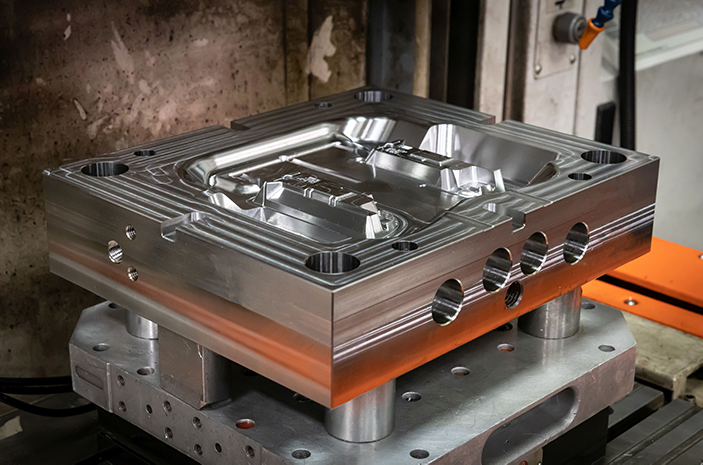
High-speed machining is ideal for producing injection molds, die-casting molds, stamping dies, and graphite electrodes. It delivers excellent surface finishes and accurate contour machining, reducing polishing time and shortening mold manufacturing cycles.

 Mold and Die Manufacturing


Aerospace Industry

Aircraft structural parts, engine components, and aluminum alloy parts often feature thin walls and complex geometries. High-speed machining minimizes deformation while maintaining high accuracy, making it an excellent choice for aerospace manufacturing.


Automotive Industry

From cylinder heads and transmission housings to battery trays and lightweight structural components, high-speed machining helps manufacturers improve production efficiency while maintaining consistent quality in both prototype and mass production.


Medical Device Manufacturing

Medical implants, surgical instruments, and precision medical components require exceptional dimensional accuracy and smooth surface finishes. High-speed machining enables manufacturers to produce these critical parts with greater consistency and reliability.


Electronics and Precision Engineering

Components such as heat sinks, communication housings, semiconductor fixtures, and precision mechanical parts often involve small features and intricate machining. High-speed machining improves machining efficiency while ensuring excellent dimensional accuracy and surface quality.


How to Choose the Right High-Speed Machining Center

Choosing the right high-speed machining center isn't simply about selecting the highest spindle speed. The best machine is the one that matches your parts, materials, production volume, and long-term business goals. Before making a decision, consider the following factors.


Match the Machine to Your Workpiece

Start by evaluating the size, weight, and complexity of the parts you machine most often. Large molds, thin-wall aerospace components, and precision medical parts all have different machining requirements. Selecting a machine with the right travels, table size, and rigidity ensures better productivity and machining accuracy.


Consider the Materials You Machine

Different materials require different machining characteristics. Aluminum and graphite often benefit from higher spindle speeds, while stainless steel, titanium, and hardened steel demand greater rigidity and cutting stability. Choosing a machine designed for your primary materials helps maximize performance and tool life.


Evaluate Accuracy and Surface Finish Requirements

If your products require tight tolerances or high-quality surface finishes, look beyond spindle speed. Machine rigidity, thermal stability, positioning accuracy, and CNC control performance all have a direct impact on the quality of the finished part.


Choose the Right Configuration

A high-speed machining center should be equipped with configurations that support efficient and stable production. Depending on your application, consider features such as high-speed spindles, through-spindle coolant, automatic tool changers, high-performance guideways, tool measurement systems, and chip management solutions.


Consider Future Production Needs

Your production requirements may grow over time. Investing in a machine with expansion options or automation compatibility can help support future business development while reducing the need for additional equipment upgrades.


Work with an Experienced Manufacturer

A reliable supplier provides more than just a machine. Engineering support, application advice, installation, operator training, spare parts availability, and responsive after-sales service all contribute to long-term production success. Choosing an experienced manufacturer helps reduce risks and ensures reliable operation throughout the machine's service life.


FAQs

1. What spindle speed is considered high-speed machining?

There is no universal spindle speed that defines high-speed machining. While many high-speed machining centers operate at 12,000–24,000 RPM or higher, true high-speed machining depends on the overall machine performance, including spindle quality, machine rigidity, CNC control, and motion system—not just spindle speed.

2. Which materials are best suited for high-speed machining?

High-speed machining performs exceptionally well on aluminum alloys, graphite, copper, plastics, and many mold steels. With the right tooling and cutting parameters, it can also machine stainless steel, titanium alloys, and hardened steel efficiently.

3. Is a high-speed machining center suitable for heavy cutting?

Not always. High-speed machining centers are primarily designed for high-efficiency finishing, semi-finishing, and precision machining. For continuous heavy roughing of large steel components, a heavy-duty machining center may be a more suitable choice. Many manufacturers combine roughing and high-speed finishing to achieve the best overall productivity.

4. Does high-speed machining reduce tool life?

When applied correctly, high-speed machining can actually extend tool life. Stable machine performance, proper cutting parameters, effective cooling, and efficient chip evacuation reduce cutting forces and heat buildup, allowing tools to perform more consistently.

5. What industries benefit the most from high-speed machining centers?

Industries that require high precision, excellent surface finishes, and fast production cycles benefit the most. These include mold and die manufacturing, aerospace, automotive, medical device production, electronics, and precision engineering.

6. How do I choose the right high-speed machining center?

Start by evaluating your workpiece size, materials, required accuracy, production volume, and budget. You should also consider machine rigidity, spindle performance, CNC control, cooling system, and the manufacturer's technical support. Choosing a machine that matches your actual production needs will deliver better long-term value than simply selecting the highest spindle speed.


Conclusion

A high-speed machining center is more than a faster machine—it's an investment in productivity, precision, and long-term competitiveness. By choosing a machine that matches your production needs, you can improve efficiency while maintaining consistent machining quality.

Looking for the right high-speed machining solution? Contact Yangsen today and let our experts help you find the best machine for your business.

Contact Yangsen CNC Factory

伝言を残す

伝言を残す
当社の製品に興味があり、詳細を知りたい場合は、ここにメッセージを残してください。できるだけ早く返信いたします。
送信

製品

whatsApp

コンタクト