ブログ

How to Reduce Your CNC Machining Costs?

Mar 27, 2026

CNC machining costs are rising—but many companies are still overspending without realizing it.

In most cases, high costs are not caused by the process itself, but by inefficient design, wrong machine selection, or poor process planning. The difference between a high-cost part and a cost-efficient one often comes down to a few key decisions.

The good news? You can significantly reduce CNC machining costs without sacrificing quality.

In this guide, you’ll learn practical, engineer-proven strategies to lower your machining costs, improve efficiency, and get better value from every part you produce.

What Drives CNC Machining Costs?

CNC machining cost is not random—it is driven by a few key factors. Understanding these factors is the first step to controlling and reducing your total cost.

Material Cost

The type of material you choose has a direct impact on cost.

Materials like aluminum are easier to machine and more affordable, while stainless steel, titanium, or hardened alloys increase both material and machining expenses.

Machine Time

The longer a part takes to machine, the higher the cost.

Complex geometries, multiple operations, and inefficient tool paths all increase cycle time and overall machining cost.

Labor & Setup

Programming, fixture setup, and machine adjustments require skilled labor.

Frequent setups or small batch production can significantly raise costs.

Tooling Cost

Cutting tools wear out over time, especially when machining hard materials.

Higher tool consumption and frequent tool changes will increase overall production cost.

Part Design Complexity

Tight tolerances, deep cavities, thin walls, and complex features all make machining more difficult.

The more complex the design, the more time, tools, and precision are required.


10 Ways to Reduce CNC Machining Costs

1. Simplify Part Design

In CNC machining, complexity directly translates into cost. Features like deep pockets, narrow slots, sharp internal corners, and thin walls all require special tooling or multiple passes, which increases machining time.

For example, deep cavities often require long tools, which reduce rigidity and force slower cutting speeds. Sharp internal corners may require smaller tools, further increasing machining time.

In many cases, adjusting internal radii, reducing unnecessary depth, or relaxing non-critical tolerances can significantly improve machinability. These small design changes can reduce cycle time, improve tool life, and lower overall cost without affecting part performance.


2. Choose the Right Material

Material affects not only the price of raw stock, but also cutting speed, tool wear, and machining stability.

Aluminum alloys are widely used because they allow high cutting speeds and stable machining. In contrast, stainless steel generates more heat, and titanium requires lower cutting speeds and higher cutting forces, both of which increase machining time and tooling cost.

If the application does not require high-strength or corrosion-resistant materials, switching to a more machinable option can reduce both cycle time and tool consumption.


3. Optimize Machining Process

An unoptimized process often includes unnecessary operations, excessive tool changes, or inefficient tool paths.

For example, a part that requires multiple setups could potentially be completed in fewer setups with better planning. Each setup involves repositioning, re-clamping, and re-alignment, all of which add non-cutting time.

Improving tool paths to reduce air cutting, minimizing tool changes, and combining roughing and finishing strategies can significantly shorten the total machining cycle.


4. Select the Right CNC Machine

Machine selection has a direct impact on both efficiency and cost.

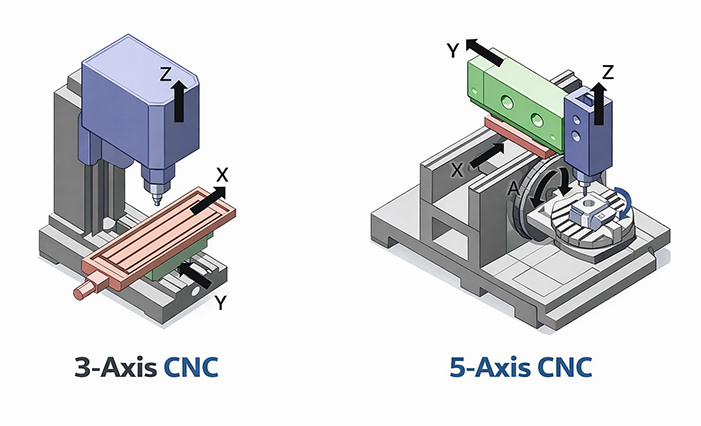
Using a basic 3-axis machine for complex parts often requires multiple setups, increasing both time and error risk. On the other hand, a 5-axis machine can complete the same part in a single setup, reducing handling time and improving accuracy.

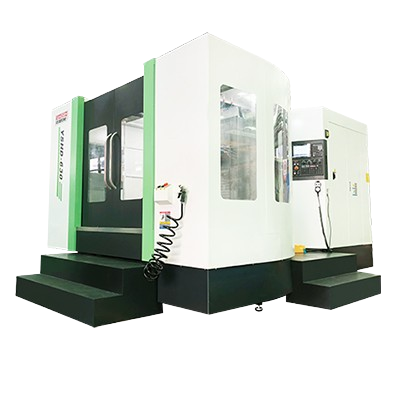
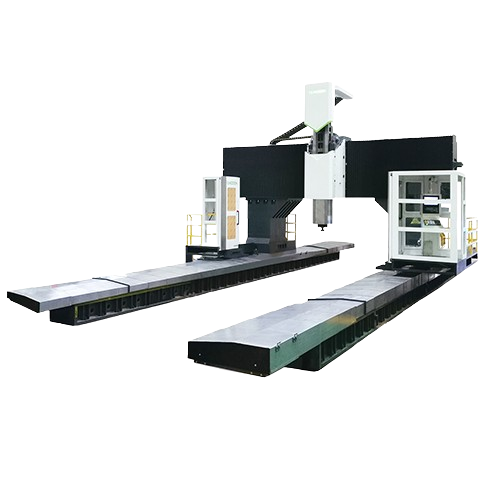
For batch production, horizontal machining centers are more efficient because they allow multi-face machining and reduce idle time. For large workpieces, gantry machines eliminate the need for repeated repositioning.

The key is not choosing the most advanced machine, but choosing the one that best fits the part geometry and production volume.

5. Reduce Setup Time

Setup time is often underestimated because it does not directly produce parts, but it consumes valuable machine hours.

Frequent fixture changes, manual alignment, and program switching reduce machine utilization. In small-batch production, setup time can account for a large portion of total cost.

Using standardized fixtures, modular clamping systems, and grouping similar parts into the same production run can significantly reduce setup frequency and improve efficiency.


6. Increase Production Volume

CNC machining includes fixed costs such as programming, setup, and inspection. When production volume is low, these costs are distributed across fewer parts, resulting in a higher unit cost.

As production volume increases, these fixed costs are spread over more units, reducing the cost per part. Even a moderate increase in batch size can improve cost efficiency.

This is why prototype parts are often expensive, while mass production is more cost-effective.


7. Use High-Efficiency Cutting Tools

Tooling directly affects machining performance. Low-quality tools tend to wear quickly, require frequent replacement, and limit cutting speed.

High-performance tools, especially those with advanced coatings, can operate at higher speeds and maintain stability over longer periods. This reduces both machining time and tool change frequency.

Although the initial cost is higher, the overall cost per part is often lower due to improved productivity.


8. Optimize Cutting Parameters

Cutting parameters determine how efficiently material is removed.

Running with conservative parameters increases machining time unnecessarily, while overly aggressive settings can lead to tool breakage or poor surface finish.

Optimizing spindle speed, feed rate, and depth of cut based on material and tool characteristics allows higher material removal rates while maintaining stability. This directly reduces cycle time.


9. Extend Tool Life

Tool life affects both direct tooling cost and indirect production efficiency.

Frequent tool replacement interrupts machining and increases downtime. Inconsistent tool wear can also affect part quality.

Using proper cooling methods, selecting appropriate tool coatings, and monitoring tool wear conditions can extend tool life and maintain stable production.


10. Consider Automation

As production scales, manual operations become a limiting factor.

Automation solutions such as automatic tool changers, pallet systems, and robotic loading reduce manual intervention and improve consistency. Machines can run longer with fewer interruptions, increasing overall output. Although automation requires initial investment, it reduces labor costs and improves long-term efficiency, especially in repeat production scenarios.


Machine Selection Strategy for Cost Reduction

Machine selection has a direct impact on CNC machining cost, yet it is often overlooked. In many cases, high costs are caused not by the process itself, but by using the wrong machine.

The key is to match the machine to the part.

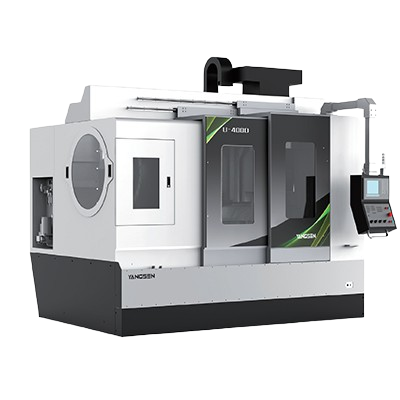
Simple parts are best produced on 3-axis machines with lower operating costs. However, complex parts with multiple faces or angles often require multiple setups on basic machines, which increases time and labor. Using 4-axis or 5-axis machines can reduce setups and complete machining more efficiently.

For batch production, horizontal machining centers offer clear advantages. They allow multi-face machining and reduce repeated clamping, which improves efficiency and lowers cost per part.

For large workpieces, gantry machines help avoid repeated repositioning and improve overall stability, making them more cost-effective for heavy-duty machining.

Choosing a machine that fits your part complexity and production volume is one of the most effective ways to reduce machining cost.

If you are unsure which solution is best, working with experienced engineers can help you identify the most efficient and cost-effective approach.


Common Mistakes That Increase CNC Costs

Many CNC machining costs come from avoidable mistakes. The most common ones include:

Over-specifying tolerances

Applying tight tolerances across the entire part increases machining time and inspection cost, even when it’s not functionally required.

Using the wrong machine

Complex parts on basic machines require multiple setups, while simple parts on high-end machines increase cost unnecessarily.

Inefficient process planning

Extra operations, frequent tool changes, and poor tool paths all lead to longer cycle times and lower efficiency.

Choosing unsuitable materials

Difficult-to-machine materials increase tool wear and slow down production without always adding real value.

Ignoring setup efficiency

Frequent fixture changes and realignment reduce machine utilization and increase labor costs.

Poor tooling strategy

Low-quality or mismatched tools lead to faster wear, more downtime, and higher overall cost.


FAQs

1. How can I reduce CNC machining costs without affecting quality?

The key is to focus on efficiency, not compromise.

Optimizing part design, selecting more machinable materials, reducing unnecessary tolerances, and choosing the right machine can significantly lower cost while maintaining performance.

2. Does part design really impact CNC machining cost that much?

Yes, design is one of the biggest cost drivers.

Features like deep cavities, tight tolerances, and complex geometries increase machining time and tool wear. Even small design changes can lead to noticeable cost savings.

3. Is 5-axis machining more expensive than 3-axis machining?

Not always.

While 5-axis machines have higher hourly rates, they can reduce setups and complete complex parts in one operation. For complex parts, this often results in a lower total cost.

4. What is the most cost-effective material for CNC machining?

Aluminum is generally one of the most cost-effective options due to its good machinability and lower tool wear.

However, the best material depends on the part’s functional requirements and application environment.

5. Why does batch size affect CNC machining cost?

CNC machining includes fixed costs such as programming and setup.

When production volume increases, these costs are distributed across more parts, reducing the cost per unit.

6. How can I get a more accurate CNC machining quote?

Provide complete and clear information, including drawings, tolerances, material requirements, and expected quantity.

The more detailed the input, the more accurate and cost-efficient the quotation will be.


Conclusion

Reducing CNC machining cost is not about lowering quality—it’s about making smarter decisions. From part design and material selection to process planning and machine choice, every step has a direct impact on the final cost.

In many cases, small adjustments can lead to significant savings. The challenge is knowing where to optimize.

If you’re looking to reduce your machining cost or improve production efficiency, working with experienced engineers can make a real difference.

Send us your drawings, and we’ll help you identify cost-saving opportunities, recommend the right machining solution, and deliver the best value for your project.

伝言を残す

伝言を残す
当社の製品に興味があり、詳細を知りたい場合は、ここにメッセージを残してください。できるだけ早く返信いたします。
送信

製品

whatsApp

コンタクト